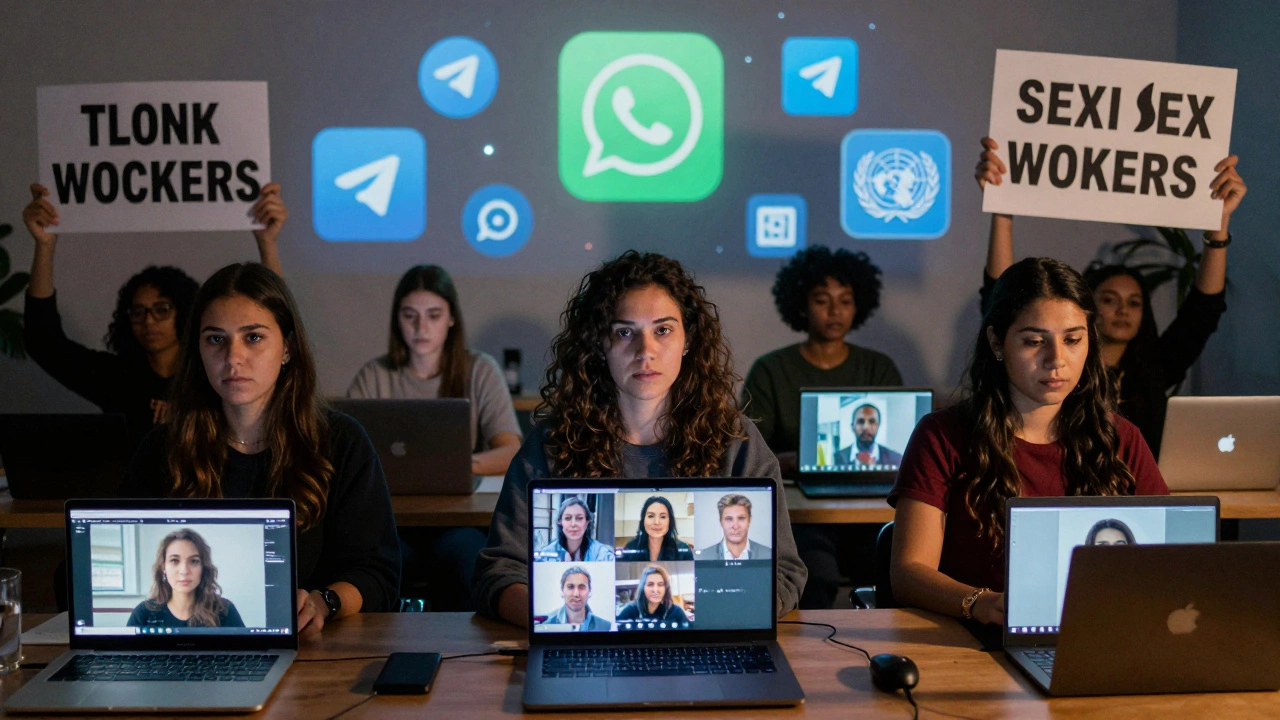
On March 2, 2020, as governments worldwide scrambled to respond to the early days of the pandemic, a quieter but no less urgent movement gained momentum: International Sex Worker Rights Day. While headlines focused on lockdowns and ventilators, sex workers in over 40 countries organized protests, virtual town halls, and mutual aid networks to demand decriminalization, safety, and dignity. This wasn’t just another awareness day. It was a reckoning - one that exposed how criminalization, stigma, and outdated laws put vulnerable people at greater risk than the virus itself.
In cities like Dubai, where underground networks thrive under strict legal shadows, the day sparked quiet conversations. Some turned to platforms like dubai escort telegram to share safety tips, verify clients, or simply find community. These weren’t ads. They were lifelines. For many, especially migrant workers, digital spaces became the only place where they could speak openly without fear of arrest or deportation.
Why March 2? The History Behind the Day
International Sex Worker Rights Day began in 1975, when 100 sex workers in Lyon, France, occupied the Church of Saint-Nizier to protest police harassment and unsafe working conditions. Their action, once dismissed as radical, became the blueprint for global activism. Since then, March 2 has been marked by rallies in Bangkok, protests in Buenos Aires, and online campaigns in Lagos and Manila. The core demand remains unchanged: decriminalize sex work, not punish it.
Unlike legalization - which often creates licensing systems that exclude marginalized workers - decriminalization removes criminal penalties entirely. It treats sex work as labor, not crime. Countries like New Zealand, which fully decriminalized sex work in 2003, saw drops in violence, improved health outcomes, and better access to police protection. Meanwhile, places that doubled down on criminalization, like the U.S. under FOSTA-SESTA, saw sex workers pushed further underground, with fewer tools to screen clients or report abuse.
The Global Patchwork of Laws
There’s no global standard. In some countries, selling sex is legal but buying it isn’t - a model known as the Nordic model. In others, like the Netherlands, it’s regulated through brothels and zoning laws. In many parts of Asia and the Middle East, including the UAE, sex work is illegal regardless of consent or age. This legal ambiguity creates chaos. Workers can’t report rape without risking arrest. They can’t open bank accounts. They can’t access housing or healthcare without fear of exposure.
In Dubai, where foreign workers make up nearly 90% of the population, the risks are especially high. Many women arrive on tourist or domestic worker visas, only to find themselves trapped by debt, language barriers, or abusive employers. Some turn to sex work out of desperation. Others are trafficked. The line between choice and coercion is rarely clear - and the law doesn’t help untangle it.
Lebanese Escort Dubai and the Reality of Migration
The term lebanese escort dubai surfaces in online forums and private messaging apps, often as a descriptor used by clients or brokers. But behind the label are real people - women fleeing economic collapse, war, or gender-based violence in Lebanon. With the Lebanese pound losing over 90% of its value since 2019, thousands have crossed borders seeking survival. Dubai, with its high demand for domestic and personal services, became a destination.
But the city offers no legal protections. A Lebanese woman working in Dubai has no labor rights if she’s labeled a sex worker. She can’t file a complaint if a client refuses to pay. She can’t go to the police if she’s assaulted. The system doesn’t see her as a worker - only as a criminal. Even when she’s not breaking the law, the law treats her like she is.

Escort Ladies Dubai: Voices From the Margins
When people say escort ladies dubai, they often imagine glamour, luxury, and choice. The reality is far more complex. Many of these women work long hours, often alone, in hotel rooms or private apartments. They pay high rents to brokers. They pay for fake IDs. They pay for translation services. They pay for the cost of staying hidden.
One woman, who asked to be called Layla, told a researcher in 2021: "I don’t want to be an escort. I want to be a nurse. But no one hires me without papers. And I can’t get papers without a sponsor. So I work nights. I save. I dream of school." Her story isn’t unique. It’s systemic.
Organizations like the Global Network of Sex Work Projects (NSWP) have documented how criminalization increases HIV transmission rates among sex workers by 30-50% because fear of arrest prevents them from carrying condoms or seeking testing. In Dubai, where healthcare is excellent for citizens, undocumented workers often avoid clinics altogether. They rely on informal networks - friends, WhatsApp groups, Telegram channels - for basic health advice.
What Changed After 2020?
The pandemic didn’t stop activism - it accelerated it. With in-person gatherings banned, sex workers turned to digital tools. Online petitions gathered over 1.2 million signatures. Virtual rallies reached audiences in countries where public protest is impossible. In 2021, the United Nations Human Rights Council issued a statement urging member states to decriminalize sex work, citing pandemic-related harms.
Some progress followed. In Thailand, police began shifting from raids to harm reduction. In South Africa, courts ruled that criminalizing sex work violated constitutional rights. But in the Gulf, silence remained. No new laws were passed. No public statements were made. The only change was deeper invisibility.

The Missing Piece: Data and Recognition
One reason sex worker rights are ignored is because governments refuse to collect data on them. In Dubai, there are no official statistics on how many sex workers live in the city. No one knows how many are foreign nationals. No one tracks arrests, deportations, or deaths. Without data, there’s no accountability.
Organizations like the Arab Network for Sex Workers have tried to fill that gap. They’ve mapped informal networks, documented cases of abuse, and trained peer advocates. But they operate without funding, without legal status, and without protection. Their work is invisible - even to the people who need it most.
What Can Be Done?
Change doesn’t start with laws. It starts with recognition. Recognizing that sex workers are human beings with rights. Recognizing that criminalization doesn’t reduce demand - it just moves it into darker corners. Recognizing that the same people who demand "moral purity" also profit from the system that exploits them.
Here’s what actually works:
- Decriminalize sex work - remove criminal penalties for selling and buying sex, and for organizing.
- Protect migrant workers’ rights - ensure visa portability and access to legal aid.
- Fund peer-led health services - not top-down programs, but ones designed and run by sex workers themselves.
- Stop police raids - they don’t rescue anyone. They destroy trust and push people into deeper danger.
- Listen to sex workers - they’re the experts on their own lives.
March 2, 2020, wasn’t just a day of protest. It was a turning point. For the first time, the global conversation about sex work began to shift from morality to human rights. The question isn’t whether sex work should exist - it’s whether society is willing to let those who do it live without fear.